China Top Tesla Solar Panel Suppliers for Global Buyers
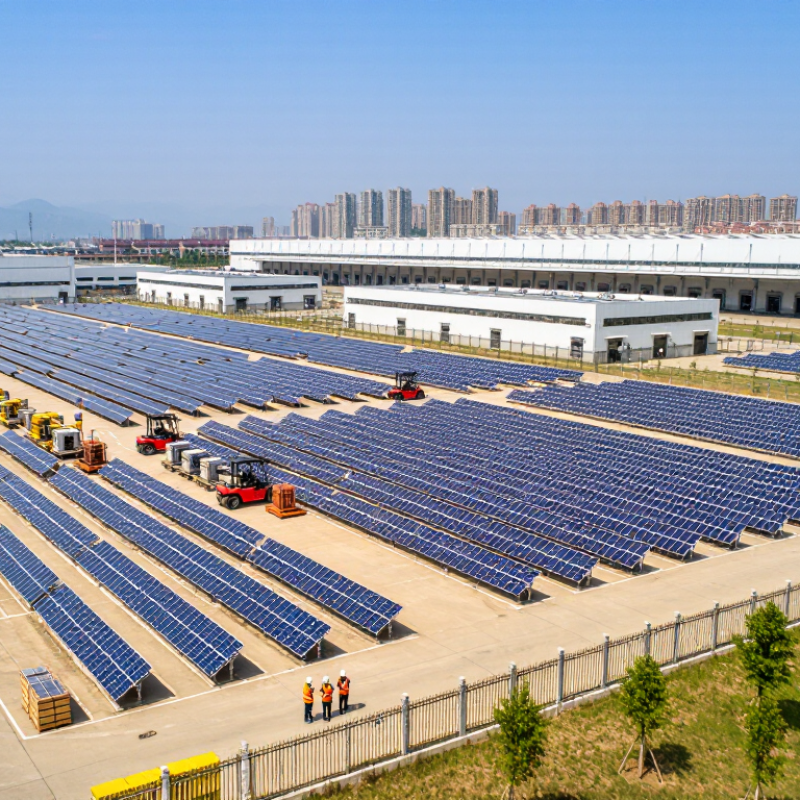
China’s solar supply chain is central to any serious search for Tesla solar panels suppliers. The International Energy Agency’s 2022 report, Solar PV Global Supply Chains, found that China held more than 80% of global manufacturing capacity across key solar-panel production stages. That concentration can mean competitive pricing and broad manufacturing expertise. It also makes supplier verification essential.
IEA Executive Director Fatih Birol warned: “The world will almost completely rely on China for the supply of key building blocks for solar panel production through 2025.” The remark highlights both China’s industrial scale and buyers’ exposure to concentrated sourcing. But a capable Chinese manufacturer is not automatically a confirmed Tesla supplier. Tesla’s supplier relationships and product specifications should be checked against reliable, current company disclosures before any purchasing decision.
For global buyers, the practical review starts with product documentation, factory capabilities, quality-control records, and export experience. Ask for traceable test reports. Check the details. A polished brochure is not proof of consistent production. The IEA’s Renewables 2024 report also describes continued expansion in global renewable capacity, increasing the importance of dependable procurement and clear technical requirements.
This guide examines Chinese suppliers relevant to the wider solar market, while distinguishing verified facts from assumptions about Tesla’s sourcing. That distinction is easy to miss. Supplier data changes, and public information can be incomplete; even a careful comparison deserves a second look.
Tesla Solar Panels and Solar Roof: Product Types, Ratings, and Compatibility
Solar panels and integrated solar roofs serve different projects. Conventional modules sit on rails above the roof, making replacement and inspection more straightforward. Solar roofing tiles blend into the roof surface, but their output depends on usable roof area, tile layout, and installation details. Looks matter, but so does access.
Compare rated power, module efficiency, operating temperature range, and product warranty on current datasheets. A higher wattage rating does not guarantee more energy from a shaded or poorly oriented roof. NREL’s PVWatts model uses a default 14% system-loss assumption, covering factors such as wiring, soiling, and mismatch. Real losses vary. That detail is easy to miss.
Compatibility is practical, not just electrical. Check inverter input limits, string voltage, roof structure, fire-rated assembly, and monitoring requirements with a qualified installer. Integrated roofing may require components designed for that system; mixing parts without confirmation can create service problems. The International Energy Agency’s PVPS Trends report tracks the rapid growth of solar deployment, but global market growth does not make every product interchangeable. Ask for an itemized design showing expected annual generation, shading assumptions, and the exact equipment list. Then compare it with your utility bills and roof condition. Small roof obstructions matter. A vent pipe can change the layout.
Residential Solar Panel Ratings: Representative Module Classes
Representative nameplate ratings for commonly available photovoltaic module classes range from about 400 W to 550 W per panel. Actual output depends on the specific module and test conditions; roof and inverter compatibility should be checked against the product datasheets.
China’s PV Manufacturing Base: Over 80% of Global Module Capacity (IEA, 2022)
China’s solar manufacturing strength is substantial, but the headline statistic needs careful reading.
The International Energy Agency’s 2022 report found that China held more than 80% of global manufacturing capacity across key solar photovoltaic supply-chain stages. That figure does not apply equally to every stage. For modules specifically, the IEA estimated China’s share at about 75% of global manufacturing capacity in 2021; its share was higher for wafers and cells. The distinction matters when buyers compare supplier scale.
At a procurement level, concentrated production can mean broad product availability and established supply networks. It does not guarantee consistent quality or delivery. A buyer reviewing a supplier should check factory capacity, product test documentation, warranty terms, and shipment records. Ask for details tied to the exact module model, not only company-wide figures. Small differences matter. For example, confirm whether quoted capacity refers to annual nameplate output or actual production, and whether it covers the same product type. The IEA also warns that geographic concentration can expose supply chains to disruption. One overlooked point: a large manufacturing base is useful, but it cannot replace independent verification and realistic lead-time planning.
Official Tesla Suppliers or Compatible Modules? Verify Authorization and Specs
A supplier’s claim of official status should be checked, not assumed. Ask for current authorization documents that identify the manufacturer, product range, and sales territory. Confirm details directly through the manufacturer’s published contact channels. A logo on a quotation is not proof.
Compatible modules are a different category. They may fit a project’s electrical and physical requirements without being officially authorized. Request the exact model number, datasheet, test reports, and written warranty terms. Compare rated power, voltage, current, dimensions, connector type, and temperature coefficients with the system design.
Small mismatches matter. A connector can look right and still be unsuitable.
Check production dates and batch traceability, too. Ask how defects are handled and who pays freight for replacement units. For a sample order, inspect labels and packaging against the supplied documents before approving volume shipments. Keep records.
These checks take time, and documents can still be incomplete; I would pause rather than treat a hurried answer as reassurance. A qualified system designer should confirm compatibility before installation.
Supplier Due Diligence: IEC 61215/61730, Traceability, and Warranty Checks
For global buyers sourcing solar modules from China, due diligence should begin with documents, not price. Request valid IEC 61215 and IEC 61730 certificates, then confirm the exact model number, factory, and bill of materials match the shipment. IEC 61215 evaluates design qualification and performance; IEC 61730 addresses module safety. Neither certificate guarantees every delivered panel is defect-free. Check certificate validity directly with the issuing body, and ask whether production changes trigger renewed testing. Small details matter.
Traceability should connect each pallet to a production date, line, material batch, and inspection record. Ask for serial-number lists before loading, plus sample flash-test reports showing power tolerance and measurement conditions. The IEA PVPS report “Snapshot of Global PV Markets 2024” estimated that global installed PV capacity exceeded 1.6 terawatts by the end of 2023, making consistent quality control increasingly important across complex supply chains. For warranties, compare product and power guarantees, exclusions, claim timelines, and who pays transport or replacement costs. NREL’s 2024 Annual Technology Baseline uses an assumed module degradation rate of 0.5% per year; treat this as a modeling input, not a promise for a specific shipment. Keep the paperwork. It can still be incomplete. A factory audit, retained module samples, and clear dispute procedures help expose gaps before a container reaches port.
Global Procurement Context: 345.5 GW of Solar Added in 2023 (IRENA)
IRENA reported that global solar capacity grew by about 345.5 GW in 2023, underscoring how quickly buyers must assess suppliers and delivery plans. Solar made up the largest share of new renewable capacity additions that year. For global procurement teams, this growth means more choice, but also tighter scrutiny of product specifications, production capacity, and shipping timelines.
A quotation alone is not enough. Ask for current test reports, traceable bills of materials, and clear warranty terms. Check whether the stated output rating matches the exact module model being offered.
For buyers sourcing from China, compare suppliers against the project’s climate and installation conditions. A panel destined for a hot, humid coastal site may need different performance evidence than one installed in a dry inland region. Review temperature coefficients, degradation figures, and independent certification records.
Keep the distinction clear: IRENA’s capacity statistics show market scale, not product quality; that distinction matters. Procurement data can also become outdated quickly, so verify figures directly before committing.
Tips
Request sample documentation before a deposit. Confirm the factory’s monthly output and available shipment window in writing. Small checks help. Still, paperwork cannot remove every risk; allow time for independent inspection and keep a practical buffer in the schedule.