Choosing the best flat roof in China is not a simple materials contest. Climate, building use, workmanship, and maintenance change the answer.
A coastal warehouse in Guangdong faces intense sun, humidity, and typhoon-driven rain. A factory in northern China may need stronger insulation and protection from freezing temperatures. Western regions can bring sharp temperature changes and limited rainfall. Each location tests a flat roof differently.
John Straube, a respected building enclosure expert, has said, “Water management is the most important function of a building enclosure.” This principle remains highly practical. A roof may look modern and durable, yet small drainage errors can create ponding water beside a drain. Weeks later, blistered membranes, stained ceilings, or damaged insulation may appear.
The best flat roof usually combines reliable waterproofing, correct slope, thermal insulation, strong flashing, and accessible maintenance paths. Common systems include modified bitumen, PVC, TPO, EPDM, and liquid-applied membranes. Their performance depends on installation quality, not only product labels.
That is where many comparisons become imperfect. A premium membrane cannot rescue poor detailing. A lower-cost system may perform well when contractors understand local conditions. I have seen specifications promise long service life, while neglected drains quietly shortened it.
This guide examines China’s main flat roof options through climate suitability, durability, installation practice, energy performance, and maintenance needs. It does not offer one universal winner. The more useful question is different: which system fits the building, the region, and the people responsible for maintaining it?
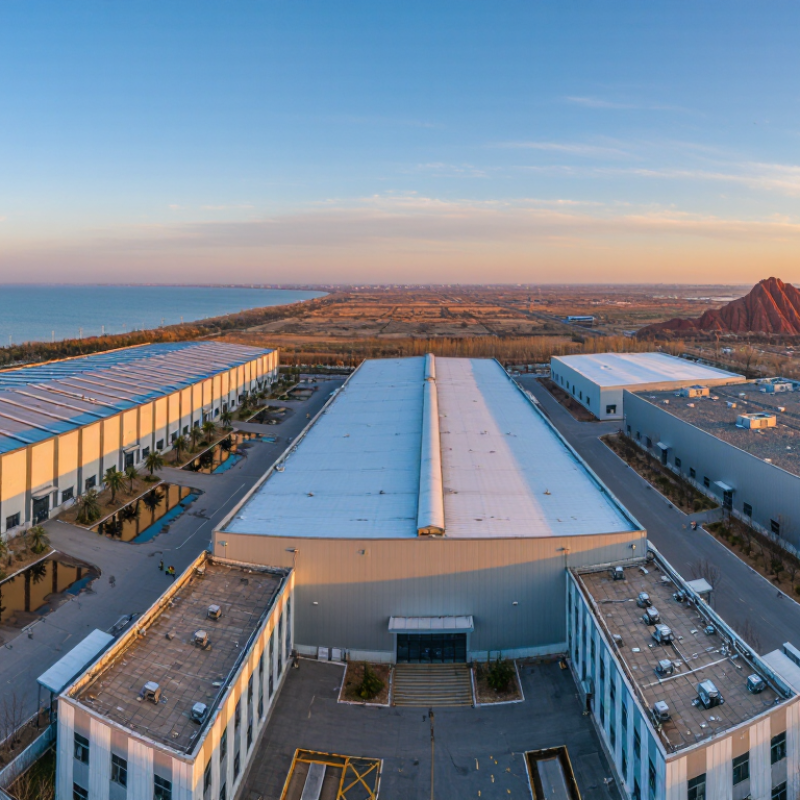
What Is the Best Flat Roof in China?
China’s best flat roof is not defined by one material. It is defined by climate, structural load, drainage, and code compliance. The China Meteorological Administration reported national precipitation of about 615 millimeters in 2023, but regional differences are substantial. Southern cities face intense rain and typhoons. Northern areas face freeze-thaw cycles and snow. Northwest regions face strong sunlight, dust, and large temperature changes. A roof must respond to its site, not to a national average.
Structural safety comes first. GB 50009, the Load Code for the Design of Building Structures, requires designers to consider permanent, live, wind, snow, and seismic loads. Solar panels, water tanks, and maintenance equipment can create unexpected pressure points. Ponding water is especially dangerous. It adds weight while exposing weak drainage. China’s Technical Code for Waterproofing of Building Roofs, GB 50345, also emphasizes falls, drainage layers, detailing, and membrane protection. Small defects matter. A blocked outlet can reveal poor planning within one storm.
Practical inspections often find failures around parapets, pipe penetrations, and expansion joints. These areas deserve stronger detailing than broad roof surfaces. Energy performance matters too. Research from the China Academy of Building Research shows that roof insulation influences building cooling and heating demand. However, thicker insulation is not automatically better. It can complicate drainage height and maintenance access. The best design balances local weather data, verified structural calculations, durable waterproofing, and realistic maintenance. That balance is easy to underestimate.
What Is the Best Flat Roof in China?
China’s climate makes “best” a site decision, not a product label. In humid southern cities, PVC and TPO membranes resist standing water and many chemicals. Their light surfaces can also reduce heat gain. The U.S. Department of Energy reports that cool roofs may lower peak cooling demand by roughly 10–15% in suitable buildings. EPDM remains flexible during temperature changes, but its seams and edge details need careful inspection. Bitumen systems tolerate rough construction conditions and repairs well. However, dark surfaces can become extremely hot under summer sun.
Metal roofing offers long service potential, often 30–50 years, when corrosion protection and fasteners are properly designed. It also sheds rain quickly. Yet thermal movement can loosen details, especially on large warehouses. Industry service-life guidance commonly places PVC and TPO near 20–30 years, EPDM near 25–35 years, and bitumen near 15–25 years. These figures are not guarantees. Installation quality changes everything.
A 2023 International Energy Agency buildings report states that building operations account for about 30% of global final energy use. Roof reflectance, insulation, ventilation, and airtight detailing therefore deserve equal attention. On a Chinese factory roof, I would check wind exposure, drainage falls, ultraviolet exposure, and maintenance access before choosing a membrane. One mistake is trusting laboratory aging data too much. Real roofs face dust, punctures, blocked drains, and hurried repairs. A technically weaker system may perform better when local installers understand its details.
What Is the Best Flat Roof in China?
How China’s GB 50345 Standard Shapes Flat-Roof Waterproofing
The best flat roof in China is not defined by one waterproofing material. GB 50345 establishes a technical framework for roof waterproofing design, construction, and inspection. It considers roof functions, climate exposure, drainage, and expected service conditions. That matters across China, where heavy rain, freezing temperatures, strong sunlight, and coastal humidity affect roofs differently.
Details often decide performance. A compliant design should manage falls toward drains and reduce standing water after storms. It should also treat parapets, pipe penetrations, expansion joints, and equipment bases as high-risk areas. These small locations frequently fail before the main roof field. Workers need suitable substrate preparation, controlled overlaps, and careful protection during later construction. A membrane can perform well on paper, yet poor installation can defeat it.
Good practice also requires layered thinking. The roof may include a structural deck, insulation, a vapor-control layer, waterproofing, and protective finishes. The correct arrangement depends on moisture movement and local conditions. Field records, material checks, and water testing support reliable acceptance under the standard’s requirements. However, compliance alone does not guarantee a trouble-free roof. I have seen designs that followed general rules but overlooked maintenance access or blocked drains. That weakness deserves honest review. A practical roof should be inspectable, repairable, and matched to the building’s real exposure, not selected from a catalogue alone.
| Waterproofing System | Typical Layer Arrangement | Main Advantages | Key Limitations | Typical Best-Fit Applications | GB 50345 Design Considerations | Overall Suitability |
|---|---|---|---|---|---|---|
| Polymer-Modified Bitumen Membrane | Concrete or cementitious substrate, primer, polymer-modified bitumen membrane, protection layer, insulation where required, and finished surface. | Good resistance to rainwater, established installation methods, broad availability of compatible accessories, and relatively strong puncture resistance when protected. | Open-flame installation may create fire-control requirements. Seams, details, and exposed surfaces require careful quality control and maintenance. | Residential, commercial, industrial, and refurbishment projects where a robust multi-layer membrane system is required. | The membrane type, number of layers, thickness, protection, drainage, detailing, and construction quality should match the roof waterproofing design grade and exposure conditions. | Very suitable |
| Thermoplastic Polyolefin Membrane | Prepared substrate, separation or bonding layer where needed, thermoplastic membrane with hot-air-welded seams, insulation or protection layer, and roof finish. | Continuous welded seams, good resistance to ultraviolet exposure and weathering, relatively clean installation, and suitability for large roof areas. | Requires trained installers and reliable hot-air welding. Sharp substrate irregularities and uncontrolled movement can damage the membrane. | Large commercial, logistics, public, and industrial roofs with extensive areas and a preference for mechanically fastened or adhered sheet systems. | Substrate flatness, fixing density, wind uplift, seam testing, perimeter anchorage, penetrations, and drainage details should be included in the design and inspection plan. | Very suitable |
| Polyvinyl Chloride Membrane | Prepared deck, separation layer where compatibility requires it, PVC sheet membrane, welded joints, edge restraints, and protective or functional surface layers. | Reliable heat-welded seams, consistent factory-produced sheet quality, and good suitability for exposed flat roofs when correctly detailed. | Compatibility with plasticizers, bitumen, insulation, and adjacent materials must be checked. Long-term performance depends strongly on detailing and installation. | Exposed commercial and industrial roofs, mechanically fixed systems, and projects requiring a sheet membrane with welded joints. | Material compatibility, separation layers, wind resistance, seam quality, penetrations, corners, and protection against mechanical damage are important design controls. | Suitable |
| EPDM Rubber Membrane | Prepared substrate, compatible adhesive or fastening system, EPDM sheet membrane, bonded or taped joints, protection layer, and finished roof surface. | High flexibility, good resistance to ozone and weathering, and strong ability to accommodate movement when properly designed. | Joint systems and adhesives require careful workmanship. Compatibility, ponding water, wind uplift, and repair details must be addressed during design. | Projects exposed to substantial temperature changes, movement, or weathering where a flexible sheet membrane is preferred. | The design should address movement joints, edge restraint, wind actions, seam reliability, drainage, and protection from puncture and construction traffic. | Suitable |
| Cementitious Capillary Waterproofing | Sound concrete substrate, repaired and cleaned surface, cementitious waterproofing coating or slurry, protective finish, and compatible drainage or protective layers. | Compatible with mineral substrates, useful for concrete repair zones, and relatively convenient for irregular areas and some below-grade or protected applications. | Usually less tolerant of structural movement, cracking, and long-term exposed weathering than a fully flexible membrane system. | Concrete roof areas with limited movement, protected waterproofing zones, repair interfaces, and applications where a mineral-based system is appropriate. | Crack control, substrate moisture, curing, protective layers, roof movement, and the need for a separate flexible membrane should be assessed rather than relying on the coating alone. | Conditionally suitable |
| Liquid-Applied Polymer Waterproofing | Prepared and primed substrate, reinforced liquid-applied coating at critical locations, multiple applied coats, cured waterproof layer, and protective or traffic-resistant finish. | Seamless coverage, useful around penetrations and complex geometry, and adaptable to maintenance or refurbishment projects with many details. | Application thickness, curing, substrate moisture, weather conditions, and reinforcement placement must be controlled carefully. It may be vulnerable to damage before protection. | Complex roof layouts, refurbishment work, balconies, upstands, equipment bases, and detail-intensive areas. | The design should define substrate preparation, dry-film thickness, reinforcement, curing conditions, protection, drainage, and inspection procedures. | Conditionally suitable |
| Composite Membrane System | Two compatible waterproofing layers, such as a sheet membrane combined with a liquid-applied or modified-bitumen layer, with reinforced detailing and a protective finish. | Can improve redundancy, detail reliability, and repairability when the layers are compatible and independently well installed. | Higher material and labor cost, more interfaces to inspect, and greater risk of trapped moisture or incompatibility if the system is not engineered correctly. | Important buildings, complex roofs, high-consequence leakage areas, and projects requiring additional redundancy. | Layer compatibility, drainage between layers where relevant, termination details, repair strategy, construction sequencing, and inspection records should be explicitly designed. | High-performance option |
What Is the Best Flat Roof in China?
A reliable flat roof often begins with a 2% slope, but this figure is not automatically sufficient. On site, concrete deflection, insulation movement, and construction errors can reduce the actual fall. A roof designed at 2% may perform closer to 1%. That difference matters after heavy rain. Drainage outlets should sit at genuine low points, with overflow paths and accessible strainers. During inspections, I look for ponding marks, blocked outlets, and uneven screeds.
Thermal performance depends on more than insulation thickness. Roof assemblies should match the local climate, from cold northern winters to humid southern summers. Continuous insulation reduces thermal bridges around parapets, pipes, and equipment bases. A well-sealed vapor control layer also limits hidden condensation. Yet calculations can miss workmanship. Small gaps can create surprisingly warm or damp patches indoors. This is where thermal imaging and moisture checks provide useful evidence.
Wind resistance requires careful attention to corners and roof edges. These zones experience stronger suction than the central field. Mechanical fastening, bonding, or ballast must suit the roof structure and membrane system. Fixings need proper spacing, pull-out testing, and secure treatment around penetrations. Parapet details deserve equal care. They are common weak points. The best flat roof is therefore not simply the steepest or thickest option. It is a coordinated system, adjusted for climate, drainage, insulation continuity, and verified construction quality. Even good drawings need on-site correction.
What Is the Best Flat Roof in China?
For Chinese buildings, roof quality should be judged by service life, cost, and maintenance records. The Whole Building Design Guide reports typical low-slope roof lives of 15 to 30 years, depending on materials, detailing, and climate. NRCA technical guidance gives similar ranges. These figures are not guarantees. Poor drainage can shorten them sharply.
Initial price often hides future labor. A lower-cost membrane may require more frequent seam checks, patching, and water testing. The U.S. Department of Energy reports that reflective roofs can reduce peak cooling demand by roughly 10% to 30% in suitable climates. This matters in hot Chinese cities, but winter heating performance must also be considered. Local energy prices change the payback period.
Maintenance data deserves closer attention. A practical inspection plan checks ponding water, edge details, penetrations, and blistering at least twice yearly. After severe rain, inspection should happen sooner. The International Facility Management Association links planned preventive maintenance with fewer emergency repairs, although results vary by building type. That limitation is important. A roof with a 25-year specification may fail early when installers ignore slopes or drainage. In coastal areas, salt exposure adds another burden. In northern regions, freeze-thaw cycles can open small defects. A lifecycle estimate should include inspections, repairs, access equipment, and disposal costs—not only the installation invoice.