Why Choose Solar Panels for Your Business?
Why Choose Solar Panels for Your Business?
For many businesses, solar panels are becoming a practical energy strategy, not merely a sustainability statement. The International Renewable Energy Agency reported that global solar capacity reached approximately 1,419 gigawatts by the end of 2023. Solar represented the largest share of new renewable capacity added that year. This momentum reflects falling technology costs, stronger supply chains, and growing corporate interest in predictable electricity expenses.
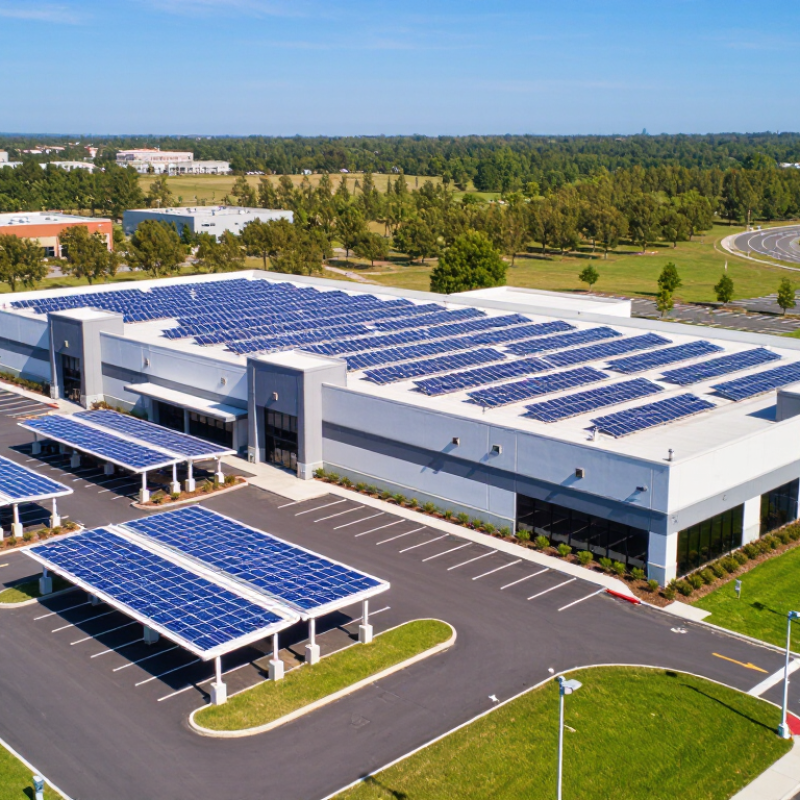
A commercial solar system can reduce daytime grid purchases, especially for warehouses, offices, farms, and retail buildings. Roofs, parking areas, and unused land may become productive energy assets. The International Energy Agency’s Renewables 2024 report expects solar photovoltaic power to deliver most renewable capacity growth through 2030. That forecast gives businesses a credible reason to examine solar investment now.
The financial case still requires careful work. Installation costs, local tariffs, roof condition, financing terms, and shading can change the result. EnergySage market data shows that system prices and savings vary widely by project location and design. A professional feasibility study should compare electricity bills, load profiles, maintenance needs, and battery options. The best project is not always the largest one. Sometimes, a smaller array matches daytime demand better.
Solar panels also create visible evidence of environmental responsibility. Customers may notice them above a loading bay. Employees may value measurable climate action. Yet solar is not effortless, and performance can disappoint without proper monitoring. Businesses should request realistic production estimates, transparent warranties, and independent financial assumptions. With disciplined planning, solar can support lower operating costs, stronger energy resilience, and a more credible long-term business strategy.
What Solar Energy Means for Modern Businesses
Why Choose Solar Panels for Your Business?
What Solar Energy Means for Modern Businesses
Solar energy now means more than placing panels on a roof. For modern businesses, it can reshape daily decisions about cost, resilience, and responsibility. A warehouse may use its strongest electricity during daylight, when panels produce most power. An office can track generation through a monitoring dashboard, comparing output with heating and cooling demand. These details turn sustainability from a promise into an operating measure. That matters.
A sound project begins with evidence, not attractive sales language. An energy audit can reveal roof shade, weekend loads, demand charges, and aging equipment. Engineers should review structural capacity, local rules, fire access, and expected weather exposure. Financial models should test conservative production estimates and maintenance costs. They should also examine battery storage, grid connection limits, and future expansion. Numbers help. They can still mislead when assumptions remain hidden.
In practice, solar can reduce exposure to changing electricity prices, but it does not remove every risk. Cloudy weeks lower production, repairs require planning, and unsuitable roofs may make installation uneconomic. Businesses should request clear warranties, independent performance checks, and documented installer qualifications. Staff also need simple procedures for monitoring alerts and cleaning schedules. The strongest decision may be a smaller system installed in stages. That is less dramatic, yet often more credible. A careful owner should revisit the forecast after twelve months of actual operating data.
The Financial Benefits of Installing Solar Panels
Why Choose Solar Panels for Your Business?
Solar panels can turn an unused warehouse roof into a long-term financial asset. A business with strong daytime electricity demand may consume power as it is produced, reducing purchases from the grid. This matters when electricity prices rise or demand charges remain high.
According to IRENA’s Renewable Power Generation Costs in 2023, utility-scale solar power averaged about $0.044 per kilowatt-hour globally, after a 12% annual cost reduction. Commercial projects may cost more, but the trend remains important.
The financial case depends on real operating details. A site assessment should review roof age, shading, structural capacity, load profiles, and local electricity tariffs. A small shadow can reduce output. So can a neglected inverter.
The U.S. National Renewable Energy Laboratory reports that solar modules typically degrade gradually, often around 0.2% to 0.5% annually, but project assumptions still need verification. A battery may improve demand-charge savings, although it adds capital and maintenance costs.
Cash flow deserves careful testing. Incentives, tax treatment, financing rates, and export rules vary by location and can change the payback period.
The International Energy Agency reported that solar PV accounted for roughly three-quarters of new renewable capacity added globally in 2023, showing strong market momentum.
Still, momentum is not proof of savings for every building. Use actual utility bills, conservative production estimates, and several price scenarios.
The spreadsheet may look convincing. Reality can be less tidy.
Environmental and Energy Security Advantages for Businesses
For many businesses, solar panels are more than a visible sustainability statement. They can turn an unused warehouse roof into a working energy asset. During daylight hours, panels generate electricity close to where it is consumed. This can reduce dependence on grid power and lower exposure to volatile energy prices. A bakery may use solar electricity for refrigeration and ovens. An office may cover lighting, computers, and cooling. The environmental benefit is practical: less fossil-fuel generation is needed for each kilowatt-hour produced on site. Emissions still exist during manufacturing and installation, so honest claims should avoid calling solar completely “clean.”
Energy security also matters when outages disrupt operations. A properly designed system can combine panels, batteries, and safe backup controls. Critical loads, such as servers, pumps, or medical refrigeration, can remain powered for longer. However, standard grid-tied panels usually shut down during an outage. This protects line workers and cannot be treated as emergency power. Businesses need a professional load assessment, roof inspection, and review of local electrical requirements. Battery capacity should match actual demand, not optimistic estimates. Start small. Test the system.
Reliable decisions come from measured data. Review twelve months of utility bills, interval demand, roof shading, and seasonal production estimates. Ask for documented equipment warranties, maintenance plans, and independent safety checks. A cloudy region may still perform well, but output will vary. Storage can add resilience, yet it raises cost, weight, and replacement concerns. Solar is not magic. It may not suit a leased building or a roof nearing replacement. One overlooked detail can be the roof’s remaining service life.
Key Factors in Planning a Business Solar Installation
Why Choose Solar Panels for Your Business?
Key Factors in Planning a Business Solar Installation
When planning a business solar installation, begin with the building, not the panels. A roof survey should check age, drainage, load capacity, and shaded areas. A structural engineer may be necessary. Roof repairs can cost more after installation. That detail is easy to miss.
Review twelve months of electricity bills and hourly demand data. Compare daytime consumption with expected solar production. A warehouse may use little power on weekends. An office may peak during sunny hours. These patterns affect system size, battery value, and export income. Ask the utility about interconnection rules, metering, and available capacity. Permits and inspections also need room in the schedule.
Choose qualified installers who document safety procedures, electrical calculations, and equipment warranties. Request references for similar roofs. Their proposal should explain cleaning access, monitoring, maintenance, and replacement planning. Independent production estimates are useful, but no forecast is perfect. Weather changes. Electricity prices change too. Recheck the financial model using conservative assumptions, including financing costs and possible roof work. I would rather approve a smaller system with clear records than trust an impressive estimate. On site, leave safe walking paths around panels, inverters, vents, and emergency equipment. That practical space can protect workers and simplify inspections for years.
Why Choose Solar Panels for Your Business?
Falling solar generation costs can improve the business case for installing a photovoltaic system. When planning a project, compare the expected solar output with your electricity demand, roof or land conditions, local tariffs, financing terms, and available incentives.
The chart shows the global weighted-average levelized cost of electricity for utility-scale solar photovoltaic projects, measured in USD per kWh. Actual commercial project economics vary by location, system size, financing, installation conditions, and energy prices.