
Choosing the right Led Ceiling Light involves more than comparing wattage and appearance. Global buyers must consider room size, ceiling structure, climate, installation habits, and local electrical requirements. A compact recessed light may suit a hotel corridor, while a surface-mounted panel can serve a low ceiling better. Small differences matter.
This guide examines ten practical ceiling light types, including recessed, flush-mount, semi-flush, panel, track, pendant, smart, motion-sensor, waterproof, and decorative models. Each type offers a different balance of brightness, glare control, maintenance, and design flexibility. Experienced sourcing teams usually request lumen output, beam angle, color temperature, CRI, driver details, and photometric files. Product photos are not enough. A sample should be tested in the actual room, ideally during both daytime and evening conditions.
Reliable evaluation also includes heat management, dimming performance, mounting hardware, warranty terms, packaging strength, and documented safety compliance for the target market. A light that performs well in a dry showroom may behave differently in a humid coastal project. That point is easy to overlook. No ranking is perfect, because buyer priorities vary between homes, offices, warehouses, hotels, and retail spaces. Some efficient models still produce uncomfortable glare. Others look refined but make installation unnecessarily difficult. These practical limitations deserve attention. The following overview helps international purchasers compare the top ten Led Ceiling Light types with clearer expectations, fewer assumptions, and better evidence before placing an order.
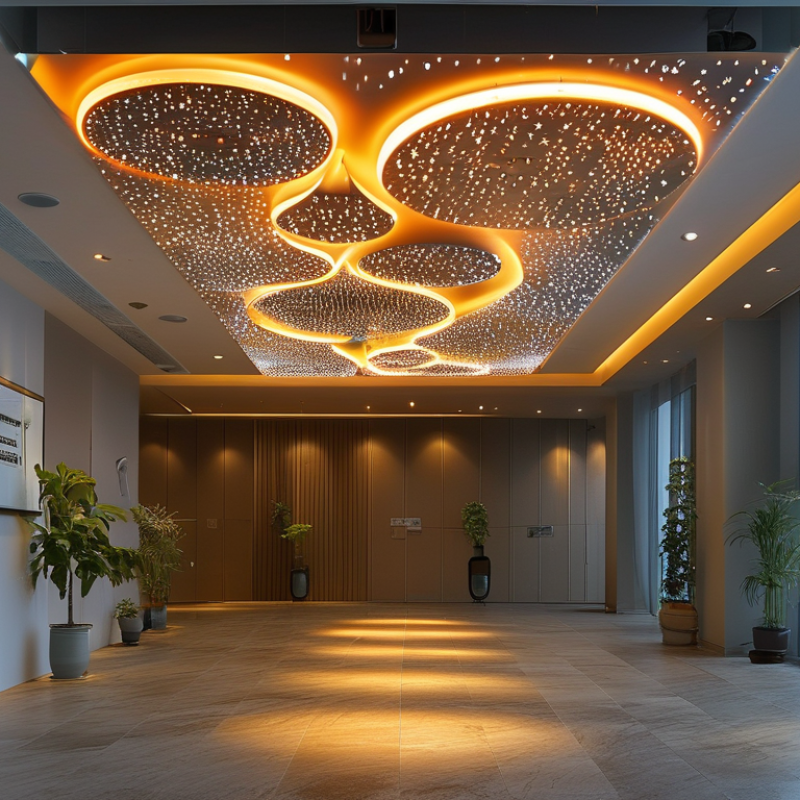
Top 10 LED Ceiling Light Types for Global Buyers
How LED Ceiling Lights Are Classified by Design and Installation
LED ceiling lights are easier to compare when classified by structure and mounting method. The ten common types include recessed downlights, surface-mounted panels, flush mounts, semi-flush mounts, linear fixtures, troffers, track lights, pendant lights, drum lights, and smart ceiling fixtures. Recessed models sit inside the ceiling and create a clean, architectural effect. Surface panels attach directly to the ceiling, which suits concrete rooms and renovation projects. Pendant and track designs provide stronger visual focus, but they need careful ceiling support.
Installation changes performance. A recessed light may require a suitable ceiling cavity, while a surface panel can fit shallow spaces. Flush fixtures reduce dust collection and work well in low rooms. Troffers suit modular commercial ceilings. Smart fixtures add sensors or wireless control, although compatibility can become confusing across markets. The U.S. Department of Energy’s 2023 SSL R&D Plan reports laboratory LED packages exceeding 200 lumens per watt. However, real luminaires lose output through lenses, drivers, wiring, and heat. This difference matters during product comparison. The IEA’s energy-efficiency reports also identify efficient lighting as a practical electricity-saving opportunity, especially when replacing older fluorescent systems.
Tips: Check ceiling depth, mounting hardware, driver voltage, beam angle, color temperature, and IP rating before ordering. A 120-volt model may not suit a 230-volt project. Also, “high efficiency” is not always high comfort; glare and uneven brightness still need review.
Top 10 LED Ceiling Light Types for Global Buyers
Ten Major LED Ceiling Light Types for Different Interior Spaces
LED ceiling lights should match ceiling height, task demands, and local electrical requirements. The International Energy Agency’s Energy Efficiency 2024 report identifies lighting as roughly 5% of global electricity use. Efficient selection matters. Flush-mount lights suit low bedrooms, corridors, and rental apartments. Semi-flush fixtures add visual depth without needing much clearance. Recessed downlights provide clean task lighting for kitchens, bathrooms, and retail aisles. Surface-mounted panels work well in offices with shallow ceilings. They create broad, even illumination.
Linear LED lights serve long workstations, counters, and modern dining areas. Troffers remain practical for grid ceilings in schools and commercial offices. LED track lights support adjustable displays in galleries, shops, and flexible living rooms. Pendant ceiling lights focus light above dining tables or reception desks. Cove lighting hides LED strips near ceiling edges, producing soft ambient layers. Decorative cluster fixtures create a focal point in lobbies, restaurants, and stairwells. Ten types, but not ten universal answers.
The U.S. Department of Energy’s 2023 Solid-State Lighting R&D Opportunities report records LED package efficacies above 200 lumens per watt in laboratory conditions. Real installations perform lower because of optics, drivers, temperature, and dust. That gap deserves attention. Buyers should compare delivered lumens, color rendering, glare control, emergency performance, and driver replacement access. Warm white light often suits bedrooms, while neutral white supports kitchens and offices. I would not trust wattage alone. A bright fixture can still feel uncomfortable when its beam is poorly controlled.
| No. | LED Ceiling Light Type | Best Interior Spaces | Typical Form & Mounting | Typical Power | Typical Light Output | Common CCT | Recommended CRI | Typical Protection | Key Selection Considerations |
|---|---|---|---|---|---|---|---|---|---|
| 1 | LED Flush Mount Light | Bedrooms, corridors, hallways, utility rooms, and low-ceiling apartments | Compact, close-to-ceiling round or square fixture; surface mounted | 12–36 W | 1,000–3,600 lm | 2700–4000 K | CRI ≥80 | IP20–IP44 | Choose a slim profile for limited ceiling clearance and a diffused cover for comfortable general lighting. |
| 2 | LED Semi-Flush Mount Light | Living rooms, dining rooms, bedrooms, and guest areas | Short decorative stem or spacer between the ceiling and shade; surface mounted | 18–60 W | 1,500–6,000 lm | 2700–4000 K | CRI ≥80 | IP20–IP44 | Provides more visual depth than a flush mount while remaining suitable for many standard-height ceilings. |
| 3 | Led Recessed Downlight | Kitchens, bathrooms, offices, retail interiors, and modern residential spaces | Trimmed or trimless recessed module installed into a ceiling cut-out | 5–25 W | 400–2,500 lm | 2700–5000 K | CRI ≥80; ≥90 for color-sensitive areas | IP20–IP65 | Check cut-out diameter, ceiling depth, glare control, beam angle, and insulation-contact requirements before installation. |
| 4 | LED Panel Light | Offices, classrooms, hospitals, meeting rooms, and commercial interiors | Large flat panel; recessed, surface mounted, or suspended | 24–60 W | 2,400–6,000 lm | 3500–5000 K | CRI ≥80 | IP20–IP44 | Look for low-glare performance, even luminance, flicker control, and compatibility with the local ceiling grid. |
| 5 | LED Troffer Light | Grid ceilings in offices, schools, healthcare facilities, and public buildings | Rectangular fixture designed for modular suspended ceiling systems | 25–75 W | 3,000–8,000 lm | 3500–5000 K | CRI ≥80 | IP20–IP44 | Confirm the ceiling-grid dimensions and select suitable optical shielding for computer-based work areas. |
| 6 | LED Linear Ceiling Light | Workspaces, kitchens, corridors, retail stores, and contemporary interiors | Long continuous or modular linear profile; surface mounted or suspended | 20–80 W per fixture | 2,000–10,000 lm | 3000–5000 K | CRI ≥80 | IP20–IP44 | Useful for uniform lines of light; assess joining systems, suspension accessories, and end-to-end lighting consistency. |
| 7 | LED Track Light | Retail displays, galleries, kitchens, hospitality spaces, and accent-focused interiors | Adjustable spotlight heads mounted on a ceiling track or rail | 7–40 W per head | 500–4,000 lm per head | 2700–4000 K | CRI ≥90 for merchandise and artwork | IP20–IP44 | Compare beam angles, glare shielding, track standard, aiming range, and color consistency between multiple heads. |
| 8 | LED Pendant Ceiling Light | Dining areas, kitchen islands, reception desks, restaurants, and decorative lounges | Suspended fixture with one or more pendants; direct or direct/indirect distribution | 10–80 W | 800–8,000 lm | 2700–4000 K | CRI ≥80; ≥90 for hospitality and dining | IP20–IP44 | Consider suspension height, visual comfort, cleaning access, ceiling load, and whether dimming is required. |
| 9 | LED Cove or Indirect Ceiling Light | Hotels, living rooms, theaters, restaurants, and architectural feature spaces | Concealed linear LED system installed in a ceiling cove, slot, or perimeter detail | 8–25 W per meter | 600–2,500 lm per meter | 2700–4000 K | CRI ≥90 for premium interiors | IP20–IP65 | Specify aluminum heat dissipation, LED spacing, diffuser quality, power-supply access, and suitable dimming control. |
| 10 | LED Bathroom or Wet-Rated Ceiling Light | Bathrooms, laundry rooms, covered outdoor areas, changing rooms, and humid environments | Sealed surface or recessed fixture with gasketed diffuser | 12–36 W | 900–3,600 lm | 3000–5000 K | CRI ≥80 | IP44–IP65 | Match the IP rating to the installation zone and verify local electrical rules, condensation resistance, and corrosion protection. |
For global buyers, LED ceiling light performance starts with usable brightness, not wattage. The U.S. Department of Energy reports that commercial LED luminaires can exceed 150 lumens per watt under suitable conditions. However, diffuser loss and poor thermal design reduce delivered light. A 24-watt fixture may produce 3,000 lumens in testing, yet feel weaker after installation. Check measured lumens, beam angle, and room height together.
Color affects comfort and visual accuracy. The Illuminating Engineering Society recommends selecting correlated color temperature according to room use, rather than choosing by appearance alone. Warm white, around 2700–3000K, suits bedrooms and hospitality areas. Neutral white, near 3500–4000K, supports offices and kitchens. For retail or task spaces, a color rendering index above 80 is a practical baseline. Higher CRI can improve product and skin-tone appearance. Sometimes, numbers hide the real experience.
Efficiency should include standby power, driver performance, and heat management. The International Energy Agency has identified LEDs as the dominant lighting technology, but energy savings depend on controls and operating hours. Rated lifespans commonly reach 25,000–50,000 hours, based on industry testing methods. That figure often means 70% remaining light output, not complete failure. Important detail. In humid rooms, sealed construction and corrosion resistance may matter more than another 5 lumens per watt. Buyers should compare test conditions carefully, because published data is not always perfectly comparable.
Global buyers need more than attractive wattage claims when selecting LED ceiling lights. Recessed downlights suit hotels and apartments with clean, directional illumination. Surface-mounted fixtures work better on shallow concrete ceilings. Panel lights support offices, classrooms, and retail areas requiring broad, even distribution. Flush mounts are practical for bedrooms and corridors. Track-style ceiling systems offer flexible aiming in commercial spaces. Pendant-integrated LED designs add visual character, but shipping volume and installation details require closer review.
Market requirements vary sharply. A fixture for Europe may need 220–240 V operation, while a global model should support wider input ranges and 50/60 Hz systems. The U.S. Department of Energy’s Solid-State Lighting R&D Plan reports laboratory LED efficacy above 200 lumens per watt, yet real products often deliver less after optics, drivers, and thermal losses.
Treat claims carefully. I have found that a cooler housing can matter more than another ten lumens. The International Energy Agency also identifies lighting efficiency as a major electricity-saving opportunity, making lifecycle performance increasingly important.
Buyers should check CRI, flicker, surge protection, power factor, CCT options, and driver replaceability. IEC 60598 safety testing and IEC 62471 photobiological assessment strengthen technical credibility. IP ratings matter in humid bathrooms and covered outdoor areas.
One weakness remains common: suppliers sometimes specify laboratory data without showing installed performance. Ask for photometric files, thermal test results, warranty conditions, and regional compliance documents before comparing the top ten types.
LED ceiling lights include recessed, surface-mounted, panel, flush, pendant, track, troffer, linear, smart, and emergency types. Their safety requirements differ. A recessed light may need thermal protection, while a bathroom fixture needs an appropriate IP rating. Dusty warehouses require stronger sealing. Wet locations demand careful installation.
The International Energy Agency reports that lighting uses about 15% of global electricity. Energy Efficiency 2023, IEA. Efficient design matters, but safety comes first. Ask for test reports based on IEC 60598-1 and the relevant product section, such as IEC 60598-2-2 for recessed luminaires. Check IEC 62471 for photobiological safety. Also review electromagnetic compatibility testing under CISPR 15 and IEC 61547.
Certification marks alone are not enough. CE, UKCA, FCC, CCC, or SAA requirements depend on the destination market. Confirm the certificate holder, model number, test laboratory, and production date. Request LM-80 and TM-21 data when long-term LED performance matters. The U.S. Department of Energy’s 2023 solid-state lighting research report still identifies efficacy, color quality, and reliability as key development priorities.
A practical mistake is trusting a copied certificate. I would not. Ask for samples, inspect wiring, and measure surface temperature after several hours. Check surge protection, driver replacement options, flicker performance, and emergency behavior. These details are easy to overlook. They should not be.