
How to Source Rattan Lighting for Global Projects?
Define Project Requirements and Rattan Lighting Specifications
Project requirements should be fixed before selecting rattan lighting. Record room dimensions, ceiling height, mounting method, voltage, dimming system, and target lux levels. A dining area may need warm 2700–3000K light, while hospitality corridors often require stronger, uniform illumination. Confirm the shade diameter and drop length with a full-scale drawing. Small measurement errors become expensive across hundreds of units.
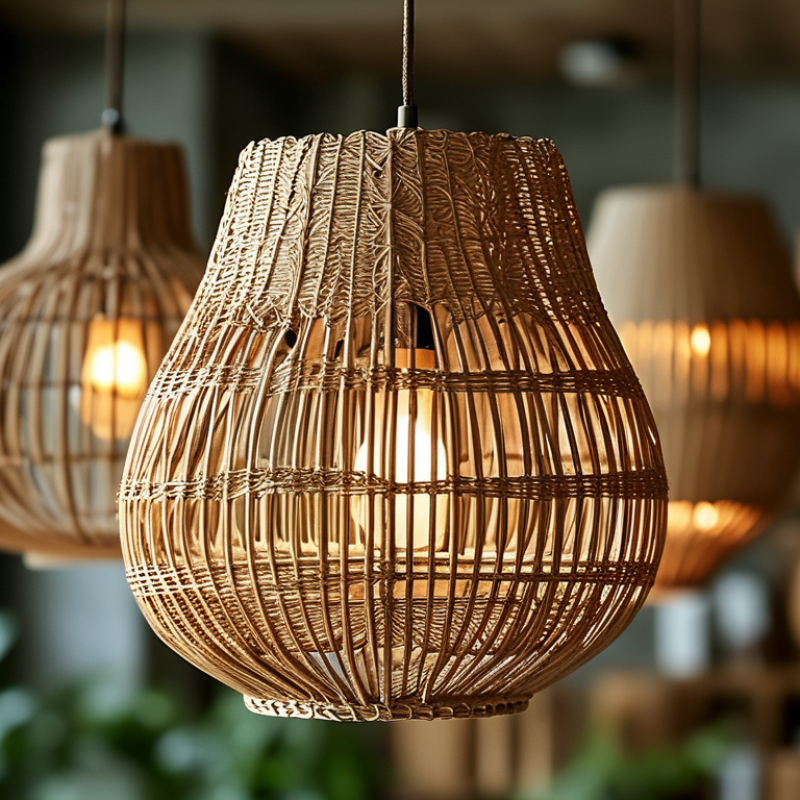
Rattan is a natural material, so samples must show weave density, color variation, edge finishing, and structural strength. Ask for flame-retardant treatment details, coating composition, moisture resistance, and cleaning instructions. Electrical components should match the destination market’s safety requirements and documented testing standards. This point is often underestimated. According to the International Energy Agency’s Energy Efficiency 2023 report, lighting represents about 15% of global electricity consumption. Efficient LED sources, suitable beam angles, and compatible controls can reduce project energy demand without weakening the visual concept.
Packaging and logistics also belong in the specification sheet. Define carton dimensions, drop-test expectations, spare-part quantities, and acceptable surface variation. The United Nations Environment Programme reported that buildings consumed about 34% of global energy in 2022. That figure supports efficient design, but efficiency alone does not prove responsible sourcing. I would also request material traceability and production photographs. My earlier assumption was that a perfect sample guarantees consistent production. It does not. Batch inspection remains necessary, especially when natural rattan changes with humidity and seasonal supply.