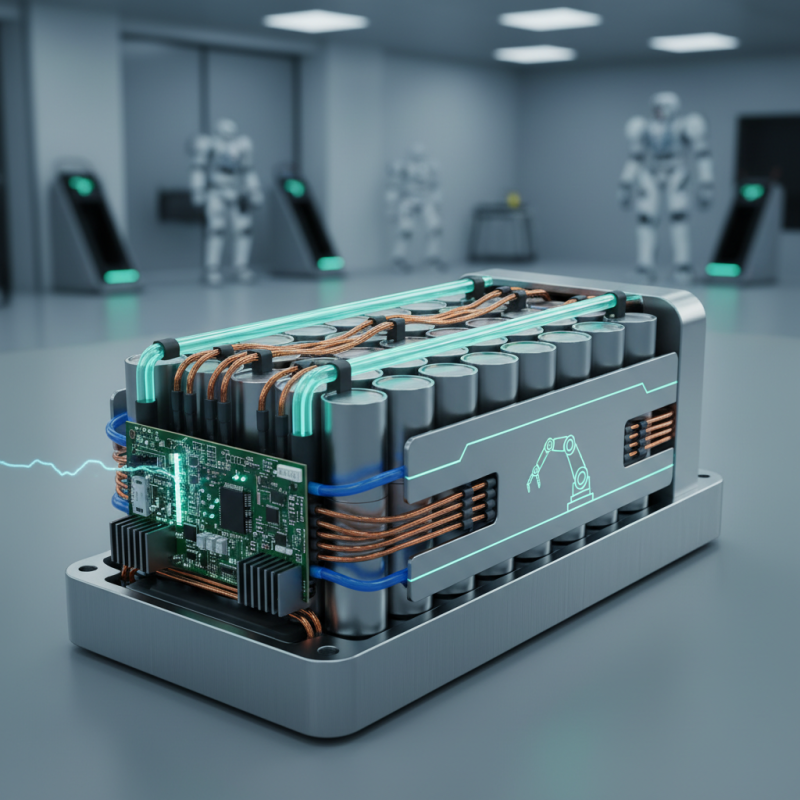
What is a Robot Lithium Battery and How Does It Work?
The robot lithium battery plays a crucial role in today’s automated world. These batteries power various robotic systems, from small drones to industrial machines. Their lightweight design and high energy density make them ideal for mobility and efficiency. However, not all aspects of this technology are flawless.
Understanding how a robot lithium battery works is essential for advancement. These batteries store energy through chemical reactions. This process enables robots to operate for extended periods. Yet, safety concerns persist. Overcharging or damage can lead to fires or leaks.
The industry must improve battery longevity and reliability. Finding ways to enhance charging speeds could further revolutionize robotic applications. Despite their popularity, there remains a need for innovation. Balancing performance with safety will always be a challenge in battery technology.
Understanding the Basics of Robot Lithium Batteries
Robot lithium batteries are crucial for the operation of various robots. These batteries provide the energy needed for movement and functionality. Understanding their basics can help in selecting the right type for different applications.
Lithium batteries have specific chemical properties. They are lightweight and can store a large amount of energy. This makes them ideal for mobile robots. However, their performance can vary. Factors like temperature and aging can affect battery life. Regular monitoring is essential for optimal performance.
Charging and discharging are critical processes. Overcharging can damage the battery, leading to a shorter lifespan. It's also important to avoid deep discharges. A balance must be maintained for longevity. Some users may overlook battery maintenance. This can lead to inefficiency and operational failures. Awareness and education about these aspects can greatly enhance robot performance.
Components and Chemistry of Lithium Batteries
Lithium batteries are crucial in robotics. Their core components significantly impact performance. A lithium-ion battery's construction includes an anode, cathode, electrolyte, and separator. The anode, often made from graphite, stores lithium ions. The cathode typically consists of metal oxides. This combination allows for high energy density and efficient charge cycles.
The chemistry of lithium batteries is fascinating. During charging, lithium ions move from the cathode to the anode. When discharging, they revert to the cathode, releasing energy. This process is critical for powering robotic technologies. According to a 2022 industry report, lithium batteries can offer energy densities over 250 Wh/kg. Their longevity often exceeds 2000 cycles. However, they have limitations. For instance, despite their efficiency, they can suffer from thermal runaway, leading to safety concerns.
Another aspect to consider is sustainability. Lithium mining raises environmental issues. Water consumption and ecosystem disruption are key factors. Reports indicate the industry must find greener solutions. As robotics evolve, the demand for better battery technology grows. Exploring alternative materials could be a solution. Balancing performance and environmental impact is essential for future developments in robotics.
How Robot Lithium Batteries Store and Release Energy
Robot lithium batteries are designed to store and release energy efficiently. Their core component is lithium-ion cells. These cells contain layers of electrodes and an electrolyte. When charging, lithium ions move from the positive electrode to the negative one, filling up the battery. This process is reversible and allows for quick energy storage.
When it comes to energy release, the stored ions move back. They flow to the positive electrode, generating electricity. This happens quickly, providing robots with the power they need for various tasks. However, the process isn’t flawless. Over time, the efficiency of energy release can diminish. Batteries may not perform as well after many cycles of charging and discharging.
Temperature can also affect performance. High temperatures may lead to overheating, while low ones can cause sluggish responses. Many factors can lead to inefficiencies in energy storage and release. Regular observation and maintenance are crucial for optimal performance. Understanding these elements helps improve battery lifespan and robot functionality.
Applications of Lithium Batteries in Robotics
Lithium batteries play a key role in robotics. They provide energy for various robotic applications. From drones to industrial robots, these batteries are essential. Their lightweight and high energy density make them popular. Robotics often demands compact power sources.
Drones rely on lithium batteries for flight. They need power to carry out tasks. Battery life directly impacts their performance. Short battery life can limit flights. Consider solar charging options. It extends battery usage significantly in outdoor environments.
In industrial settings, robotics enhances efficiency. Robots in factories often work with lithium batteries. They enable fast operation and reduced downtime. However, managing battery charging is crucial. Poor management can lead to overheating or reduced lifespan. Optimize charging schedules and monitor battery health regularly.
Tips: Always store spare batteries properly. Discard old ones safely. Regular maintenance improves battery performance and extends life.
What is a Robot Lithium Battery and How Does It Work? - Applications of Lithium Batteries in Robotics
| Battery Type | Voltage (V) | Capacity (Ah) | Energy (Wh) | Weight (kg) | Applications |
| Lithium-Ion | 3.7 | 10 | 37 | 0.5 | Drones, Autonomous Robots |
| Lithium Polymer | 3.7 | 15 | 55.5 | 0.45 | Robot Arms, Mobile Robots |
| Lithium Iron Phosphate | 3.2 | 20 | 64 | 1.2 | Industrial Robots, AGVs |
| Lithium Manganese Oxide | 3.7 | 12 | 44.4 | 0.6 | Consumer Robots, Educational Kits |
| Lithium Cobalt Oxide | 3.7 | 8 | 29.6 | 0.4 | Microcontrollers, Small Robotics Projects |
Maintenance and Safety Tips for Lithium Batteries in Robots
Lithium batteries are crucial for the functioning of robots. Proper maintenance can extend their lifespan significantly. First, store batteries in a cool, dry place to prevent overheating. Extreme temperatures can damage them. Regularly check the charge levels too. Avoid letting the battery fully die. This can lead to capacity loss.
When using batteries in robots, safety is paramount. Always check for any signs of damage before operation. Cracks or swelling indicate a problem. Handle batteries carefully to avoid short circuits. Use proper chargers designed for lithium batteries. Using the wrong charger can lead to fires.
Regularly clean the connectors to ensure a good connection. Dust can accumulate and interfere with performance. It's also wise to cycle the battery. This means discharging it fully and then recharging. This process helps maintain battery health. Develop a routine to make these checks effortless. It’s all about creating habits that ensure safety and longevity.