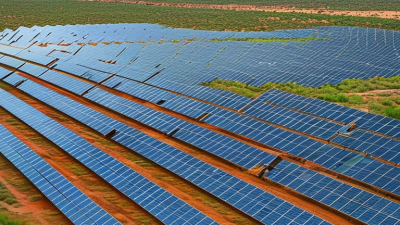
Installing solar panels can reduce electricity costs and improve energy resilience at home or work. However, a successful solar install requires more than placing panels on a sunny roof.
The process begins with an honest assessment of your property. Roof age, shading, orientation, structural strength, and local weather patterns all affect system performance. A mature tree may cast shadows across panels during peak afternoon hours. That detail matters. Energy bills from different seasons also reveal how much electricity the system should produce.
Qualified solar professionals can evaluate these conditions, recommend suitable equipment, and explain realistic production estimates. They should also review permits, utility requirements, safety procedures, and local building standards before installation begins. Certified electricians are especially important when connecting the system to your home or business electrical network. Reliable workmanship protects both performance and safety.
For businesses, the calculation becomes broader. Roof space, operating schedules, demand charges, backup needs, and future expansion can change the best design. A warehouse may have a large roof but limited structural capacity. A small office may need battery storage more than additional panels.
Some solar estimates look impressively simple. Real projects are not always that neat. Weather changes, equipment availability, roof repairs, and inspection delays can affect the timeline. Careful planning reduces unpleasant surprises, but it cannot remove every uncertainty.
This guide explains the main stages of installing solar panels for residential and commercial properties. It focuses on practical decisions, professional guidance, and details that support a dependable long-term investment.
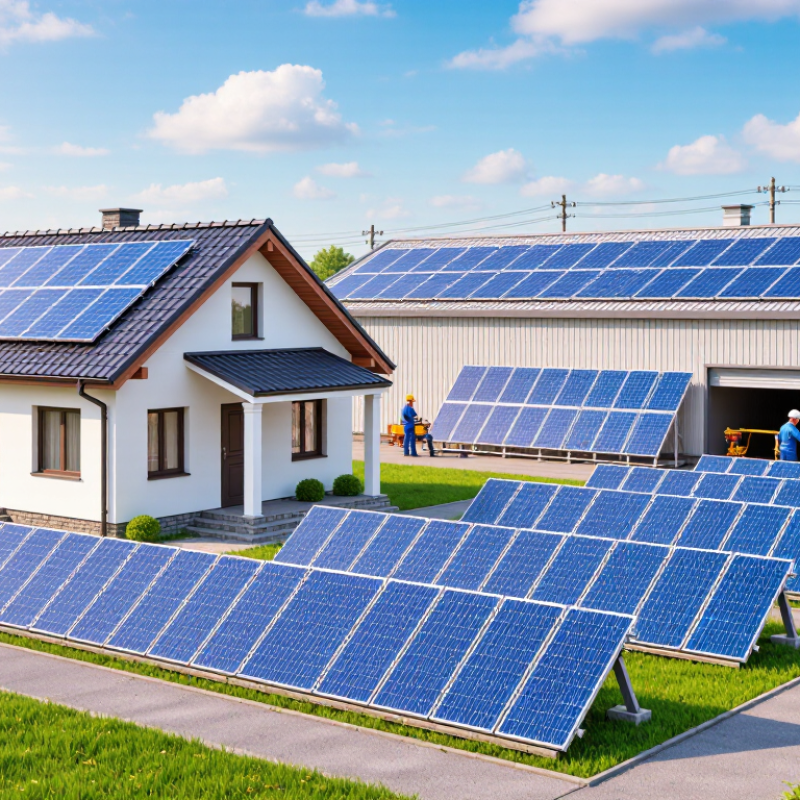
A solar installation begins with a careful property assessment, not a panel order. Walk around the roof at different times of day. Note shade from trees, chimneys, nearby buildings, and roof structures. A roof can look bright at noon but lose valuable sunlight during winter mornings.
Use recent utility bills to estimate annual electricity demand. In the United States, the Energy Information Administration reported average residential electricity consumption of about 10,500 kilowatt-hours per household in 2022. Your home may differ significantly. Electric heating, water heating, and vehicle charging can change the load profile. Businesses should examine hourly demand, operating schedules, and seasonal production patterns.
Measure usable roof area and check its orientation, pitch, age, and structural condition. The National Renewable Energy Laboratory estimates that suitable U.S. rooftop areas could generate more than 1,000 terawatt-hours annually, but technical potential is not the same as practical output. Local weather matters. The International Energy Agency reported that solar photovoltaic capacity additions reached roughly 420 gigawatts worldwide in 2023, yet individual systems still depend on sunlight, temperature, and system losses.
A professional assessment should model expected production with shading and weather data. Ask for monthly estimates, not only an annual total. Review permits, electrical capacity, and future energy plans before signing anything. The first estimate may be wrong. Recheck it. A growing family or expanding workshop can quickly make today’s system undersized.
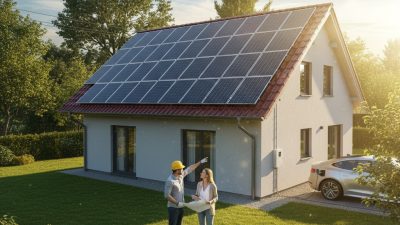
This chart compares typical monthly electricity demand with estimated solar generation from a 6 kW rooftop system. Solar output changes throughout the year because of seasonal sunlight, weather, panel orientation, and shading. Compare your electricity bills with the available roof area before choosing a system size.
Choosing the right solar panel system starts with your electricity use, roof condition, and local sunlight. IEA PVPS Trends 2024 reports that global photovoltaic capacity grew by over 400 gigawatts in 2023. That growth shows strong momentum, but larger capacity does not guarantee better performance at home. Review twelve months of utility bills before selecting system size. A shaded roof may need fewer panels, higher-efficiency modules, or a different layout.
Supporting equipment deserves equal attention. The inverter converts direct current into usable household electricity, while mounting hardware must match the roof structure and weather exposure. Add battery storage only after comparing evening demand, outage needs, space, and replacement costs. NREL’s PVWatts guidance shows that tilt, orientation, temperature, and shading can materially change production estimates. Ask for a site-specific simulation, not a simple annual promise. No design is perfect. My own mistake would be treating the panel warranty as the entire system warranty.
Tips: Check inverter efficiency, monitoring access, roof penetrations, cable protection, and emergency shutdown provisions. Request itemized estimates for equipment, labor, permits, and future maintenance. Confirm calculations against local electrical requirements and use a qualified installer. The U.S. Department of Energy notes that battery performance depends on usable capacity, power rating, and round-trip efficiency. A larger battery may still disappoint during several cloudy days. Recheck assumptions before signing.
| System Component | Recommended Data Dimension | Typical Residential Range | Typical Small-Business Range | Selection and Installation Considerations |
|---|---|---|---|---|
| Solar Panel Capacity | System rated power | 3–8 kW | 10–100 kW | Size the system according to annual electricity consumption, available roof area, local solar resource, utility rules, and the desired level of energy offset. |
| Panel Quantity | Number of modules | Approximately 7–20 panels | Approximately 23–250 panels | Based on panels rated at approximately 400–450 W each. The exact quantity depends on the selected module wattage and the target system size. |
| Panel Area | Roof area required for modules only | Approximately 14–40 m² | Approximately 45–500 m² | Modern panels commonly occupy about 1.8–2.2 m² each. Additional space may be needed for setbacks, walkways, roof obstacles, and maintenance access. |
| Annual Energy Production | Estimated electricity generation | Approximately 3,600–9,600 kWh per year | Approximately 12,000–120,000 kWh per year | Illustrative estimate using 1,200 kWh per installed kW per year. Actual output varies with location, shading, orientation, tilt, temperature, soiling, and system losses. |
| Panel Type | Module technology | Monocrystalline modules are commonly selected | Monocrystalline or other certified crystalline modules | Compare rated power, efficiency, temperature coefficient, mechanical load rating, product warranty, and performance warranty rather than relying on appearance alone. |
| Panel Efficiency | Conversion efficiency | Approximately 19–23% | Approximately 19–23% | Higher efficiency can reduce the roof area required for a given system size. It does not automatically guarantee higher total production if shading or orientation is poor. |
| Roof Orientation | Solar exposure | Best orientation depends on hemisphere | Best orientation depends on hemisphere and operating schedule | In the Northern Hemisphere, south-facing roofs generally receive strong annual exposure; in the Southern Hemisphere, north-facing roofs generally perform best. East- and west-facing roofs can also be practical. |
| Roof Tilt | Panel inclination | Often installed parallel to the existing roof | Roof-mounted or engineered tilted systems | A tilt near the site latitude can support strong annual production, but roof structure, wind loading, snow, drainage, and visual requirements may determine the final angle. |
| Inverter Capacity | AC conversion rating | Approximately 2.5–7 kW AC | Approximately 8–80 kW AC | Inverter capacity is selected with the panel array and local electrical requirements. A DC-to-AC ratio around 1.0–1.3 is commonly considered during design, subject to engineering review. |
| Inverter Configuration | Central, string, or module-level conversion | One string inverter or multiple module-level units | Multiple string inverters or a larger centralized arrangement | String inverters are often cost-effective for consistent roof planes. Module-level equipment can improve monitoring and reduce the effect of partial shading, but may add equipment and installation complexity. |
| Battery Storage | Usable storage capacity | 5–20 kWh | 20–200+ kWh | Choose storage based on evening loads, backup requirements, critical circuits, electricity tariffs, and expected operating cycles. Battery capacity should not be confused with usable capacity. |
| Battery Power Rating | Continuous charge and discharge power | Approximately 3–10 kW | Approximately 10–100+ kW | Energy capacity determines how long loads can run; power rating determines which loads can operate simultaneously. Motors and other high-starting-current equipment require additional assessment. |
| Mounting and Racking | Roof or ground support structure | Roof rails, clamps, flashing, and bonding hardware | Engineered roof or ground-mounted racking | The structure must be compatible with the roof material and designed for local wind, snow, seismic, corrosion, and waterproofing requirements. Roof penetrations must be properly sealed. |
| Electrical Protection | Protection and isolation equipment | DC isolator, AC disconnect, overcurrent protection, and grounding | Additional disconnects, distribution equipment, protection, and grounding | Equipment must comply with applicable electrical codes and utility interconnection requirements. Protection design should be completed by a qualified electrical professional. |
| Monitoring System | Performance data | Daily energy, power output, alerts, and consumption data where available | Array-level, inverter-level, load-level, and operational alerts where available | Monitoring helps identify shading, equipment faults, unusual output reductions, and maintenance needs. Internet connectivity may be required for remote reporting. |
| Electrical Service Capacity | Existing service and connection point | Commonly 100–200 A residential service, subject to local design | Often 200 A or larger, subject to facility demand and utility review | Confirm main-panel capacity, busbar limits, available breaker space, service voltage, transformer capacity, and export limits before finalizing the system. |
| Installation Time | On-site construction duration | Usually 1–3 working days after approvals and equipment delivery | Usually several days to multiple weeks depending on scale and complexity | Permitting, inspections, grid approval, structural upgrades, trenching, battery installation, and weather can extend the overall project schedule. |
| Maintenance Requirements | Routine service activities | Visual inspection, performance review, and occasional cleaning | Scheduled inspections, thermal checks, equipment testing, and vegetation or access management | Solar panels generally have no moving parts, but connectors, cabling, racking, inverters, batteries, and roof seals should be inspected according to the system design and local conditions. |
| Permits and Approvals | Regulatory requirements | Building permit, electrical permit, inspection, and utility interconnection may be required | Building, electrical, fire, structural, planning, and utility approvals may be required | Requirements vary by jurisdiction. Submit drawings, equipment specifications, structural details, and one-line diagrams before installation when required. |
| Safety and Shutdown | Emergency access and isolation | Clearly labeled shutdown equipment and accessible pathways | Defined emergency procedures, labels, access pathways, and facility coordination | Solar panels can produce electricity whenever illuminated. Installations should include code-compliant shutdown methods, warning labels, clear access, and fire-safety coordination. |
| Planning note: The figures are typical planning ranges, not guaranteed results. Final system sizing should use at least 12 months of electricity bills, a site-specific shade assessment, structural review, local solar-resource data, and an electrical design prepared by qualified professionals. | ||||
Installing solar panels is not only a rooftop project. It is also a permit, safety, and grid-connection process. Before ordering equipment, check local zoning rules, structural requirements, fire setbacks, and electrical codes. Commercial projects may require stamped drawings, load studies, and detailed emergency-access plans. Permit offices often request a site plan, equipment specifications, roof calculations, and a single-line diagram. Requirements vary by jurisdiction. The International Energy Agency reported that nearly 420 GW of solar photovoltaic capacity was added worldwide in 2023. Rapid growth does not remove local review requirements.
Ask the utility for its interconnection procedure before installation. The application may require export settings, protection details, inverter data, and an approved meter configuration. Battery systems can create extra review when they export power.
Berkeley Lab’s 2024 Queued Up report found that more than 2,600 GW of generation and storage capacity remained in U.S. interconnection queues at the end of 2023. That figure reflects large projects, but it shows how grid capacity can affect schedules. Keep every drawing, email, inspection record, and approval number. Small errors can delay energization.
Use a licensed electrical professional familiar with local rules. They should verify roof condition, conductor sizing, grounding, disconnect access, rapid-shutdown controls, and warning labels. On site, leave clear walking paths and protect cable entries from water. Do not assume inspection approval means permission to operate. It may not. I would not promise a fixed timeline before the utility confirms its requirements. That assumption is easy to make, and often wrong.
Installing solar panels safely begins with the roof, not the panels. Inspect framing, roofing age, access routes, and shaded areas before lifting equipment. A professional should confirm structural capacity and local electrical requirements. Permits and utility approval may be necessary for a home or business installation. I prefer a written layout showing panel rows, cable paths, emergency access, and equipment clearances. Small omissions become expensive corrections.
During installation, use fall protection, insulated tools, eye protection, and weather-appropriate footwear. Never work on a wet roof or during unstable weather. Solar modules can produce voltage whenever light reaches them, even before connection. Keep conductors covered, label positive and negative leads, and isolate circuits before making changes. Connect panels according to the approved design, then route cables away from sharp edges, standing water, and hot surfaces. Every connector must be fully seated and protected from tension. Do not guess.
The inverter, disconnects, grounding conductors, and battery equipment, if used, should be installed and tested by a qualified electrician. They should verify polarity, insulation resistance, grounding continuity, torque settings, and shutdown controls. For a business, clear labels and an accessible disconnect help emergency crews respond quickly. I have seen rushed cable management create future faults, even when the system initially worked. Recheck roof penetrations after the first heavy rain. A careful inspection is worth the extra hour.
A well-installed solar array still needs regular attention. Monitoring turns silent faults into visible evidence. Check daily energy production against weather and seasonal expectations. A sudden 15% drop deserves investigation, not guesswork. Compare the same day from previous years when possible. Dust, shading, loose connections, and inverter faults can produce similar symptoms.
The National Renewable Energy Laboratory reports a typical photovoltaic degradation rate near 0.5% annually in its degradation-rate review. That loss is gradual. A sharp decline is different. Review voltage, current, temperature, and error records each month. For commercial systems, automated alerts can flag underperforming strings before revenue losses grow. The International Energy Agency Photovoltaic Power Systems Programme emphasizes inspection, preventive maintenance, and reliable failure detection in its operational guidance. Keep those records.
Walk around the array twice yearly. Look for cracked glass, lifted cables, corrosion, animal damage, and new shadows from growing trees. Clean modules only when soiling materially reduces output; unnecessary washing wastes water and may damage surfaces. Electrical testing should follow local safety rules and use qualified personnel. This is where many owners become too confident. A dashboard cannot detect every problem, and a clean panel does not prove electrical safety. Performance ratios should be reviewed alongside weather data, maintenance notes, and utility readings. According to the U.S. Department of Energy, proper operations and maintenance support long-term system performance, but results depend on site conditions and installation quality.