Choosing the best aluminum roofing in China requires more than comparing prices, colors, or catalog photographs. China’s climate varies sharply, from humid coastal cities to freezing northern provinces and intense western sunlight. A roof that performs well in Guangzhou may need different corrosion protection in Harbin or Xinjiang. The right decision depends on alloy quality, panel thickness, coating performance, drainage design, and installation skills.
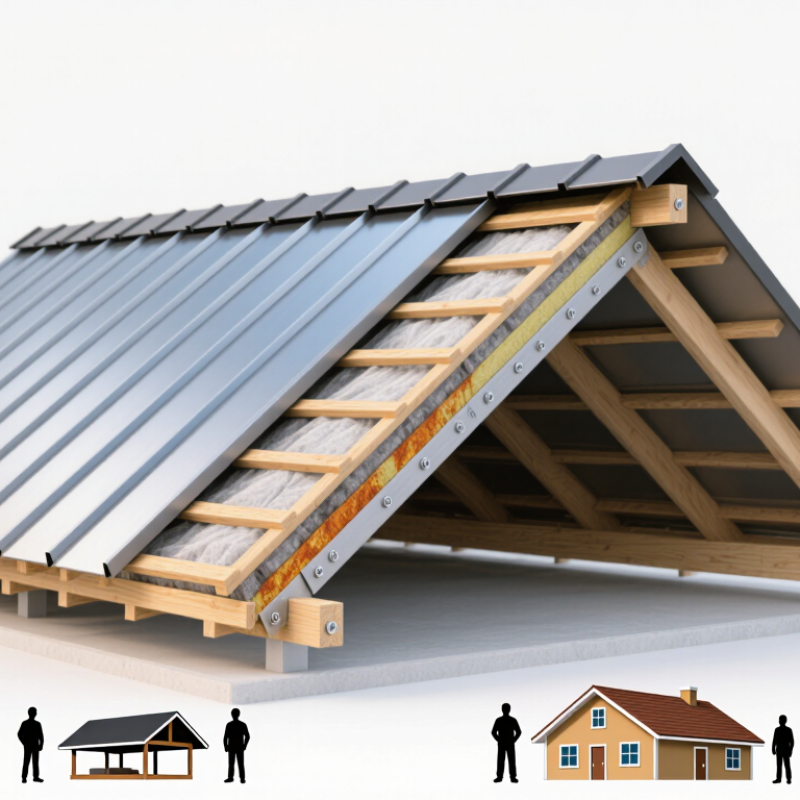
Todd G. Miller, a recognized metal-roofing specialist and president of Isaiah Industries, offers a practical principle: “The best roof is the one that matches the building, climate, and owner’s needs.” That advice matters here. Aluminum roofing should be evaluated as a complete system, not as loose sheets stacked beside a construction site. Look closely at seams, fasteners, flashings, and the roof’s underside. A poorly sealed joint can expose a beautiful surface to wind-driven rain.
Details matter.
Experienced buyers should request alloy specifications, coating data, test reports, and installation references from Chinese manufacturers. Marine projects may require stronger protection against salt and moisture. Rural buildings may prioritize low maintenance and easy replacement. Large commercial roofs may need thermal movement planning, especially under strong summer heat.
There is no perfect option. Even experienced professionals can overlook local drainage habits or subcontractor quality. That weakness deserves honest attention. A lower quotation may hide thinner panels, weaker accessories, or limited after-sales support. The best aluminum roofing choice balances durability, engineering evidence, local weather, and dependable workmanship. In China, performance begins with verification, not attractive marketing language.
What Is the Best Type of Aluminum Roofing in China?
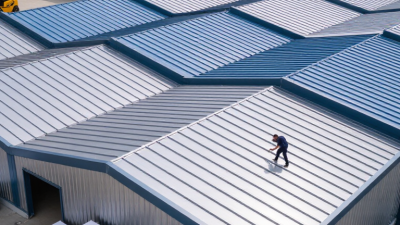
Aluminum roofing is a lightweight system made from formed sheets, structural clips, fasteners, and protective coatings. Common choices include standing-seam panels, corrugated sheets, and insulated sandwich panels. Each type serves a different building need. Standing-seam roofs suit factories, warehouses, and modern commercial buildings because concealed clips reduce exposed penetration points. Corrugated sheets are simpler and often more economical. Insulated panels improve indoor comfort.
China’s climate makes material selection important. Coastal cities expose roofs to salt air, while southern regions bring heavy rain and high humidity. Inland areas may face strong sunlight, snow, or large temperature changes. Aluminum resists rust naturally, but poor coatings and cut edges can still deteriorate. It is light. That matters on older structures.
In practical projects, coated aluminum alloy panels often provide the best balance of durability, weight, and appearance. However, no roof performs well without correct detailing. Installers must allow for thermal movement, seal laps carefully, and separate incompatible metals. Insulation beneath the panels can reduce heat and rain noise. Drainage also deserves attention, especially during intense summer storms. A common mistake is choosing a thick panel while ignoring fastener quality and roof ventilation. That decision can create leaks, condensation, or unnecessary cost. The best specification should match the building’s location, structure, maintenance plan, and expected service life. The answer is not universal.
Aluminum roofing selection depends on climate, wind load, roof shape, corrosion exposure, and forming requirements. The chart compares representative properties of commonly used aluminum alloys for roofing applications.
How to read the chart: Aluminum 3003-H24 and 3004-H24 generally offer good formability for profiled sheets and standing-seam systems. Aluminum 5052-H32 provides higher strength and is often considered for demanding or coastal environments. Thermal conductivity values are approximate representative engineering values and may vary with temper, thickness, and manufacturing conditions.
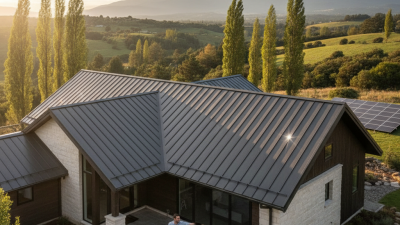
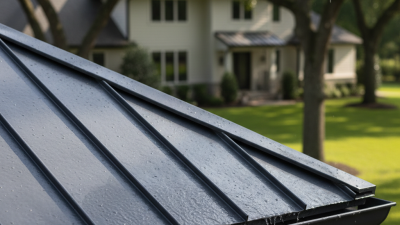
China’s aluminum roofing market offers several practical profiles for homes, factories, and commercial buildings. Standing-seam aluminum roofing is widely selected for modern projects. Its concealed clips allow panels to expand and contract with temperature changes. This matters in regions with hot summers and cold winters. The raised seams also reduce exposed fasteners and possible leakage points.
Corrugated and trapezoidal aluminum sheets suit warehouses, workshops, and agricultural structures. They are lighter and usually faster to install. However, visible screws need proper washers and accurate tightening. Tile-profile aluminum sheets provide a more traditional appearance for villas and renovation projects. Painted or coated surfaces can improve color stability, but coating quality varies between suppliers. A thicker panel is not automatically better. Alloy, temper, drainage design, and installation skill also affect service life.
Tips: Check the aluminum alloy, thickness, coating system, and test reports before purchasing. Ask for samples and inspect the surface under direct light. On coastal sites, request stronger corrosion resistance and avoid mixing incompatible metals. Leave room for thermal movement. I would also review the installer’s completed projects, not only their catalog. Details matter. A beautiful specification can still fail when gutters are undersized or roof edges are poorly sealed. A small mock-up often reveals problems earlier than a full installation.
Choosing aluminum roofing in China requires more than comparing prices. Strength depends on alloy grade, sheet thickness, profile shape, and fastening design. A ribbed panel usually resists bending better than a flat sheet. However, thicker metal is not always better. Poor support spacing can still cause deflection under wind or maintenance loads.
Ask for documented alloy, temper, coating thickness, and mechanical test results. Reliable suppliers should explain production tolerances and provide samples for inspection. On a coastal project, salt exposure makes coating quality especially important. Look for uniform finishes, sealed joints, and compatible fasteners. Small gaps around screws can become visible leaks after repeated rain and thermal movement.
Design also affects durability. Deep profiles can improve drainage, while concealed fixings create a cleaner appearance. Light colors may reduce surface heat, but they can reveal dirt more quickly. I have seen attractive roofs fail because drainage was treated as an afterthought. Request wind-load calculations for the actual building location, not a generic certificate. Check snow loads where relevant. A practical comparison should balance structural data, appearance, maintenance access, and repair convenience. That balance is easy to overlook.
Choosing the best aluminum roofing in China depends on climate, building use, and compliance with local standards. In coastal cities, salty air can accelerate corrosion, so marine-grade aluminum alloys, protected fasteners, and sealed joints deserve attention. Southern regions bring heavy rain, while northern areas face snow, freezing temperatures, and strong thermal movement. Typhoon-prone locations require verified wind-load calculations, stronger clips, and carefully fixed edge zones. A roof that performs well in one province may fail elsewhere.
Building use also changes the choice. Standing-seam aluminum roofing suits offices, schools, and large public buildings because concealed clips reduce leak points. Corrugated or trapezoidal panels may suit warehouses and agricultural buildings, where installation speed and drainage are important. Residential projects need better attention to sound, insulation, condensation, and appearance. Roof pitch, gutter capacity, ventilation, and insulation should be designed together. Small details matter.
Standards should guide the specification, not decorate it. Designers commonly review China’s load, fire, structural, and construction standards, including GB 50009 and relevant aluminum material requirements. The supporting structure must be checked for wind, snow, and panel expansion. Fire performance should be assessed for the complete roof system, including insulation and membranes. On-site inspections should verify panel thickness, coating condition, fastener spacing, and joint installation. A cheaper panel can become expensive after one difficult repair. Even experienced teams sometimes underestimate thermal movement or coastal exposure. That deserves a second review.
| Climate or Project Condition | Typical Building Use | Recommended Aluminum Roofing Configuration | Typical Material and Finish Selection | Main Design Priorities | Relevant Chinese Standards or Design References | Practical Recommendation |
|---|---|---|---|---|---|---|
| Coastal areas with salt spray, such as southeastern and island regions | Residential buildings, hotels, schools, public buildings, and industrial facilities near the coast | Standing-seam aluminum roof or mechanically seamed low-slope roof with concealed fasteners and continuous underlayment | Marine-suitable wrought aluminum sheet, commonly from the 3000 or 5000 series where appropriate; use a durable factory-applied coating system or an exposed natural-metal finish designed for the environment | Chloride corrosion resistance, drainage, galvanic compatibility, joint detailing, and resistance to typhoon wind uplift | GB/T 3880 for wrought aluminum sheet and strip; GB 50009 for building loads and wind actions; applicable waterproofing and fire regulations | Avoid direct contact between aluminum and incompatible copper, untreated steel, or alkaline materials. Use isolated fasteners and provide regular inspection of seams and drainage points. |
| Hot, humid, and high-rainfall regions, including much of southern China | Factories, warehouses, logistics buildings, agricultural structures, and commercial buildings | Standing-seam panels or corrugated/trapezoidal panels with adequate slope, end laps, side laps, and a ventilated roof assembly | Aluminum sheet typically selected for forming performance and corrosion resistance; high-durability coil coating may be used where color retention and appearance are important | Condensation control, rapid drainage, thermal movement, mold prevention in adjacent layers, and resistance to intense rainfall | GB 50345 for technical requirements for waterproofing of building roofs; GB 50009 for rain, wind, and other structural loads; GB/T 3880 for aluminum sheet | Use an unblocked drainage path, properly designed gutters and outlets, and a vapor-control strategy suited to indoor humidity. Do not rely on laps alone for low-slope waterproofing. |
| Typhoon-prone coastal zones | Large-span industrial plants, airports, sports facilities, warehouses, and high-rise podium roofs | Engineered standing-seam system with concealed clips, mechanically locked seams, reinforced perimeter zones, and tested wind-uplift resistance | Aluminum roofing thickness and clip spacing determined by structural calculations rather than appearance alone; use compatible fasteners and robust edge-metal details | Wind uplift, corner and perimeter pressure, clip pull-out, seam integrity, diaphragm behavior, and secure termination details | GB 50009 for wind-load calculation; GB 50205 where applicable to steel-structure construction quality; project-specific product and system test requirements | The roof should be engineered as a complete system. Panel thickness by itself does not establish wind resistance; fasteners, clips, seams, purlins, and edge zones must be checked together. |
| Cold northern regions with snow, freeze-thaw cycles, and winter heating | Residential buildings, schools, offices, warehouses, and public buildings | Insulated metal roof assembly or standing-seam roof with carefully designed thermal breaks, underlayment, and snow-retention measures where needed | Aluminum sheet selected for low-temperature service and forming requirements; insulation, air sealing, and vapor control are designed as part of the roof assembly | Snow load, ice dam prevention, thermal bridging, vapor migration, condensation, thermal expansion, and safe snow release | GB 50009 for snow and other building loads; GB 50176 for thermal design of civil buildings; applicable energy-efficiency and fire provisions | Design the roof for the local snow zone and indoor humidity. Provide expansion allowances and avoid trapping water beneath joints or accessories during freeze-thaw cycles. |
| High-altitude or high-UV locations | Transport facilities, public buildings, tourism facilities, and buildings in western or plateau areas | Light-colored or UV-resistant coated aluminum roof with reliable joint sealing and drainage detailing | Coating performance should be specified by measurable requirements such as color retention, chalk resistance, adhesion, and weathering durability rather than by color name alone | Solar radiation, large day-night temperature changes, coating durability, thermal movement, and maintenance access | GB/T 3880 for aluminum sheet; project coating specifications and applicable architectural coating and weatherability test requirements | Select the finish according to the actual UV exposure and expected service life. Allow for movement at long panels, penetrations, flashings, and fixed points. |
| Industrial or polluted urban atmosphere | Manufacturing plants, chemical-adjacent buildings, parking structures, and urban commercial buildings | Aluminum roof system with a chemically compatible coating, sealed penetrations, and carefully selected accessories | Aluminum alloy and coating selected after reviewing airborne pollutants, process emissions, cleaning chemicals, and expected maintenance procedures | Chemical exposure, coating compatibility, galvanic corrosion, wash-down water, and replacement of damaged components | GB/T 3190 for wrought aluminum alloy designation and chemical composition; GB/T 3880 for sheet and strip; project environmental and fire requirements | Confirm the environment with the building owner before selection. Strong acids, alkalis, cement residue, and some cleaning chemicals can damage aluminum or its coating. |
| Low-slope roofs requiring high waterproofing reliability | Commercial buildings, office buildings, podium roofs, equipment rooms, and large public facilities | Mechanically seamed standing-seam roof with continuous support, end-lap minimization, properly designed flashings, and a secondary drainage strategy | Aluminum sheet chosen for seam-forming capability, dimensional stability, and environmental exposure; use compatible membrane or underlayment where specified by the system design | Minimum slope, seam geometry, penetrations, overflow drainage, thermal movement, and maintenance access | GB 50345 for roof waterproofing; structural load design under GB 50009; product-system test documentation where required | The minimum slope must follow the selected system and project design. Roof penetrations should be minimized and detailed with prefabricated or properly formed flashings. |
| Lightweight roof replacement or renovation projects | Existing factories, old warehouses, temporary buildings, and structures with limited reserve load capacity | Lightweight aluminum panels or standing-seam overlay only after checking the existing structure, drainage, and substrate condition | Thin sheet may reduce dead load, but the final assembly also includes clips, insulation, underlayment, flashings, snow guards, and maintenance loads | Existing purlin capacity, corrosion of the substrate, fastener pull-out, compatibility with old materials, and construction safety | GB 50009 for load assessment; relevant structural safety, renovation, fire, and waterproofing requirements; GB/T 3880 for aluminum sheet | Do not compare sheet weight alone. A qualified designer should verify the existing structure, connection capacity, drainage, fire separation, and the complete renovated roof build-up. |
| Buildings with strict fire-performance requirements | High-occupancy public buildings, schools, hospitals, transport buildings, and industrial facilities with special fire risks | Non-combustible or fire-tested roof assembly using aluminum as the weathering layer and appropriately rated insulation and core materials | Aluminum itself is non-combustible as a metal, but coatings, insulation, sealants, membranes, and composite cores can change the performance of the complete assembly | Reaction to fire, fire resistance where required, smoke production, fire stopping, penetrations, and compartmentation | GB 55037 for general building fire protection; GB 50016 for building design fire protection; applicable product fire-classification and test requirements | Evaluate the complete roof assembly rather than the aluminum face sheet alone. Obtain valid fire-test or classification documentation for the specified build-up. |
| Architectural projects where appearance and long service life are priorities | Public landmarks, museums, cultural buildings, premium residential projects, and civic facilities | Custom standing-seam, interlocking, or formed-panel aluminum roof with coordinated flashings and concealed drainage | Alloy, temper, sheet thickness, surface texture, and coating are selected according to forming radius, panel size, visual requirements, and exposure | Color uniformity, oil-canning control, panel flatness, thermal movement, repairability, and long-term appearance | GB/T 3880 and GB/T 3190 for aluminum material requirements; architectural design, waterproofing, structural, and fire codes applicable to the project | Approve a physical sample and mock-up before production. Define acceptable visual tolerances, joint alignment, repair methods, and maintenance procedures in the specification. |
| Selection note: There is no single “best” aluminum roofing type for every location in China. The final choice should be based on local wind and snow loads, rainfall, salt or chemical exposure, roof slope, building use, fire requirements, thermal performance, structural capacity, maintenance access, and the tested performance of the complete roof assembly. Confirm the current edition of each applicable Chinese standard before procurement and construction. | ||||||
What Is the Best Type of Aluminum Roofing in China?
China’s varied climate requires different aluminum roofing solutions. Coastal buildings face salt spray, strong humidity, and frequent storms. Standing seam aluminum panels work well here because concealed clips reduce exposed fasteners. A durable fluoropolymer coating can also improve color retention and surface protection. Coastal air is unforgiving. Installers should still inspect joints and drainage channels regularly.
For factories, warehouses, and large commercial buildings, wide aluminum panels can reduce seams and installation time. Standing seam systems also allow thermal movement across long roof sections. Add insulation beneath the panels to control heat and condensation. This detail matters in southern China’s hot, wet summers. However, panel width must match the building’s wind exposure and structural design. Bigger is not always better.
For villas, rural homes, and renovation projects, corrugated aluminum sheets or aluminum tiles may offer a practical balance. They are lighter than many traditional materials and can simplify work on older structures. Corrugated sheets suit simple roof shapes and tighter budgets. Aluminum tiles provide a more familiar appearance for residential construction. Before choosing, check rainfall intensity, snow load, roof pitch, and local installation requirements. A low initial price can become expensive when flashing or ventilation is overlooked. Product samples help, but a qualified engineer should review the complete roof assembly.